


Music Faculty
Dr. Keola Donaghy (personal website)
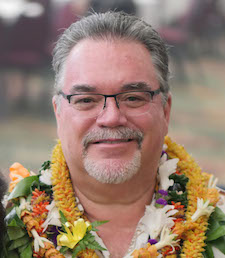 Dr. Keola Donaghy holds a B.A. in Hawaiian Studies and M.A. in Hawaiian Language and Literature from the University of Hawai‘i at Hilo, an M.A. in Pacific Island Studies from UH Mānoa, a Graduate Certificate in Telecommunications and Information Resource Management (TIRM) from UH-Mānoa, and a Ph.D. in Music (ethnomusicology focus) from the University of Otago in Aotearoa (New Zealand). His is a former member of the Board of Governors of the Hawai‘i Academy of Recording Arts and PBS Hawai‘i, and an active member of the Society of Ethnomusicology, and the International Council of Traditional Music.
Keola is a prolific haku mele (composer of Hawaiian poetry), whose compositions have been recorded by Keali‘i Reichel, Kenneth Makuakāne, Kainani Kahaunaele, Amy Hānaiali‘i, The Pandanus Club, The De Lima ‘Ohana, O’Brian Eselu, Patrick Landeza, and Steven Espaniola. His co-composition “Aloha Keauhou” (with Makuakāne) was performed by the senior women at the 2012 Kamehameha Schools Song Contest. He produced four Nā Hōkū Hanohano Awards for his work on the Institute of Hawaiian Music’s student CD recordings and four more Awards for his compositions, productions, and recorded performances. Keola is the Faculty Coordinator of the Institute of Hawaiian Music and Music Studies at UH-MC and currently Chair of the Humanities Department. He teaches Hawaiian and World Music, Music Theory and Applied music.
 Thomas Goedecke (PhD, Music Composition) is a composer, conductor, educator, and performer most known for his work intersecting sound worlds from Western and Pacific non-Western voices. He specifically finds joy in working with indigenous languages of the Pacific and combining them with traditionally Western ensembles, advocating for the proliferation and celebration of Polynesian, Asia-Pacific, and American indigenous art. Dr. Goedecke directs the College Chorus and Hawaiian Chorus and teaches music theory, music literature, music history, and voice in the Institute of Hawaiian Music and Music Studies programs at the University of Hawaiʻi Maui College.
Lecturers
Joel Katz, M.S. Ed., BA, Psychology (personal website)
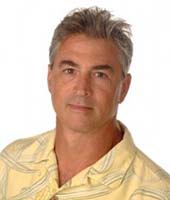 Joel Katz been performing professionally on Maui for over 30 years, and a two-time Nā Hōkū Hanohano Award-winning producer for his work on recordings by the Institute of Hawaiian Music. Joel operates the award-winning Seaside Recording Studio and is music director of the popular Maui band “Jimmy Mac and the Kool Katz”. He is also one of the foremost practitioners of the Hawaiian steel guitar on Maui, and is passionate about carrying on the tradition of this instrument and style. Joel teaches guitar, Hawaiian steel guitar, ‘ukulele, piano, pop/rock music, recording, and audio technology programs at UH Maui College.
Dr. Stephen Fox (personal website)
 Dr. Stephen Fox holds a BA in music and a Master’s degree in Community and Cultural Psychology from the University of Hawaii at Manoa and a Doctorate in Cross-Cultural Psychology from Victoria University of Wellington New Zealand. His doctoral research focused on ways participation in traditional arts such as hula and taiko influences well-being, and his ongoing research investigates these well-being influences across musical settings. Fox has played extensively with African musicians including bala master Lansana Kouyate and kora master Boujou Sisoko, with taiko master Kenny Endo, as well as numerous others from the British Isles and Europe, South America, Egypt, the Carribean, and New Zealand. On returning to academia, Fox studied Okinawan sanshin with National Living Treasure Harry Nakasone and Indonesian gamelan with emeritus pimpanan Hardja Susilo. Fox actively composes, primarily for film, and performs most frequently on santur with guitarist Michael Tanenbaum. Dr. Fox is a Nā Hōkū Hanohano Award-winning producer for his work on the Institute of Hawaiian Music’s Ha‘ina Ko Wehi CD.